04 April 2006

▶︎ The Timeout Instrumental

At the end of the hour on Top 40 radio, just before the news, the last record would end, the deejay would talk for a bit, and then he would fade in an instrumental track that had been playing in the background. The instrumental would be cued up so that it finished right on the pips (the electronic countdown to the hour). This practice was common in the 60s, but it seems to have faded out during the 70s.

I asked radio historian Wayne Mac and former 2GB panel operator Gregg Sinclair if there was a name for it and they said, yes, it was called timing out, and the tracks were fillers or timeouts.

In my mind, these works have always formed an unofficial, unnamed sub-genre of the pop instrumental. Radio people in the 60s could identify it immediately, just by choosing something that sounded okay in between a bunch of hit records and the news.

I'm calling this musical sub-genre the Timeout Instrumental, just so it has a name.*
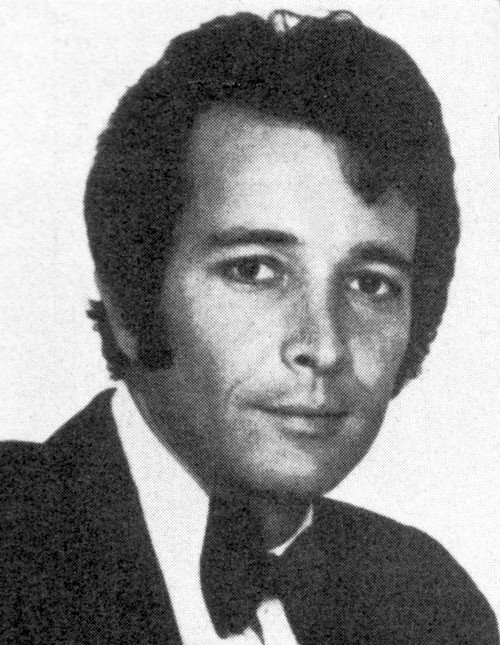
The Timeout Instrumental might have been something by Herb Alpert (right): maybe Bittersweet Samba or Up Cherry Street or Mexican Shuffle. It probably wouldn't be the latest Shadows hit, but it could be one of their B-sides or an EP track, something like The Miracle. You might have heard some album tracks, often by middle-of-the-road orchestras. I'm sure Dalilia, that space-age classic by Roger Roger & his Champs-Elysées Orchestra, would have been used: it was a favourite as background music on Australian radio and TV.**

As examples of likely Timeout Instrumental artists, Gregg Sinclair gives The Baja Marimba Band (associates of Herb Alpert), Bill Justis and Floyd Cramer. Raymond Lefèvre's Soul Coaxing is one track he recalls.

There was some skill in timing out: if the timeout track was 3 minutes long, it had to start playing, faded down, three minutes before the pips, while the last record was still playing. Gregg Sinclair writes:
The art of ‘timing out’ was made all the more interesting by the fact that most of the tracks supplied weren’t timed! Believe it or not, any panel operator worth his salt could look at a track and determine how long it ran. After a few years of experience, I could look at an album track and say: “that’s about a 2’45” job”! However, I always preferred to time them if I had the chance. Usually, I’d get in early and go through the ‘music log’ - radio talk for the playlist – and time the appropriate tracks prior to going on air.
There was a feeling in radio that using instrumental filler in this way sounded sloppy or out of date, so from the late 60s it was replaced by playing regular vocal hits up to the news.

For me, though, it lives on. Sometimes when I hear an old instrumental track I haven't heard before - maybe something by Cyril Stapleton or Sounds Incorporated - I find myself waiting for the pips, and I know I've stumbled on another Timeout Instrumental.

[For more on Timeout Instrumentals, see follow-up posts
here and here.]


_______________________________
 
*As a genre, Timeout Instrumental is similar to Northern Soul in that (1) it is applied retrospectively and (2) works are included not strictly for being of one musical style. See also Bizarro Shadows World Down Under, which is applied retrospectively and is partly defined by geography rather than style.

**Timeout Instrumental intersects with what is now known as Space Age Pop (another retrospective genre).
For more on Dalilia, see Only in Oz (9).

03 April 2006

▶︎ Bigger in Oz (1): Jo Ann Campbell - A Kookie Little Paradise (1960)

The first in a series. These are tracks that were more popular in Australia than in their countries of origin, usually Britain or the US. They took the fancy of someone at an Australian radio station, got some airplay, and charted well in some major Australian cities where they are remembered as golden oldies. Back in their home countries their chart history was lukewarm, and some of them ended up as obscurities. More than this, they're records that could have been hits anywhere, they were good enough, but this was not to be. See the whole series here: Bigger in Oz
 
 See also: Only in Melbourne.

1. Jo Ann Campbell - A Kookie Little Paradise
(Bob Hilliard, Lee Pockriss)
USA 1960
ABC single (USA) #45-10134 (August 1960)
W&G single (Australia)  #WG-S-1023
 
US charts: #61 Billboard), #59 (Cash Box)
Australian charts: #5 Sydney, #5 Adelaide, #7 Melbourne, #7 Brisbane

Out there at Jo Ann Campbell's Kookie Little Paradise the kids are out of control: swingin' about in the trees and bellowin' like Tarzan the Ape Man, drivin' fast cars down the beach without a speed limit, livin' on ice cream and pizza...

The record, from 1960, starts with jungle bird sound effects and a full-on Tarzan call (a sample from a movie soundtrack?), then it's the boys in the chorus, direct from the Riverdale High Glee Club: Dip... dip... dibba-dip-dip-dip. Kookie, huh?

This is Archie and Jughead territory: free juke boxes in the jungle, no school, junk food, sport cars and making out. It's a sugary and sticky kind of paradise:

Soft drink bubblin' down a mountain,
To the Carribean sea...

Ice cream - loaded with bananas -
And there's always pizza pie.


Jo Ann Campbell's record, on ABC, wasn't a hit in the US, but down here in Australia we really liked it: #5 in Sydney and Adelaide, #7 in Melbourne and Brisbane.

A Kookie Little Paradise was composed by Lee Pockriss, and those wacky teen-oriented lyrics were by Bob Hilliard, born 1918, who'd been writing since the 1930s.

In similar territory, Pockriss and Hilliard also wrote Seven Little Girls Sitting In The Backseat, a US #9 in 1959 for Paul Evans. Pockriss wrote Itsy Bitsy Teeny Weeny Yellow Polka Dot Bikini with Paul Vance, Bryan Hyland's 1960 US #1.

There was one slightly earlier - and lesser known - release of A Kookie Little Paradise by The Tree Swingers (July 1960). The B-side, in keeping with the jungle theme, was Teaching The Natives To Sing, also written by Pockriss & Hilliard

A British version by Frankie Vaughan charted #31 in the UK. Like Jo Anne Campbell, Frankie was in his early twenties - they were both born in 1938 - but you're never too old for ice cream loaded with bananas.

______________________
 
Follow-ups 16 May 2006 and later:

A welcome comment on my post came from Terry Byrnes, an original member of the Tree Swingers duo with Art Polhemus (Kenny Chandler joined them after Kookie Little Paradise). Terry noted that their version was recorded as a demo for Jo Ann Campbell but ended up being released before her version, with Teaching The Natives To Sing "hastily added to provide a 'B' side".

Terry added some whatever-happened-to updates: My partner, Art Polhemus went on to produce The Blues Magoos and I continue to work with Joe Venneri (The Tokens), and coach college soccer.

Phil X Milstein subsequently posted some Kookie audio treasures over at Probe is Turning-on the People! There you can listen to two Jo Ann Campbell versions, one with a Tarzan call, one without; and what turns out to be be the original version, by The Tree Swingers, along with the B-side. 

Kees van der Hoeven (of John D. Loudermilk fame) was onto the alternative Jo Ann Campbell versions, at The Originals Problem-solving Forum: Original version had an Ape-call introduction. After release it was quickly withdrawn and re-issued with a decent no-ape version that became the OZ hit. (Post now deleted.)

Joop Jansen, also at the Forum, mentioned three other versions, all in languages other than English, now also listed by Phil.

29 March 2006

▶︎ Billy J. Kramer, Del Shannon and The Beatles

The way I remembered it, the first Beatles songs I ever heard - before I’d even heard of The Beatles - were Do You Want To Know A Secret by Billy J. Kramer & The Dakotas and From Me To You by Del Shannon. Both songs were on Australian radio around June 1963.

I first heard Billy J. Kramer's Do You Want To Know A Secret in the middle of the night, around 3.00 am, when I'd got up to fix a snack and had pulled in some distant Top 40 station on the kitchen radio, turned down low so I wouldn't wake up the folks. The station might've been 2SM, from Sydney, one of those stations that used to come in only after dusk.

I liked it in the same way I liked other melodic pop songs of the early 60s: George Hamilton's Abilene, The Everlys' So Sad, or Joe Brown's That's What Love Will Do.

I had no idea that Do You Want To Know A Secret originated with an approaching cultural hurricane, The Beatles.

I’ve always had this picture of myself, alone in the late-night kitchen and hearing - through the static and fade-outs of a distant station - a first breeze, a faint stirring of something greater, still unimagined.

This was a few months before the summer vacation of '63-'64, when Beatlemania would hit us properly, when I Want To Hold Your Hand and I Saw Her Standing There would be all over the radio. The Beatles wouldn’t really enter my consciousness until the Australian Spring of 1963.

Back in the winter, when I’d heard Del Shannon's version of From Me To You on 3DB, the announcer - Barry Ferber - had made it sound as if this was just another Del Shannon gem, and he’d added, "There's also a version of that out by Britain's Beagles."


Beagles? As in Donald Duck comics, the Beagle Boys? Ferber probably did say Beatles and I misheard him, but it gave me a picture of some eccentric English band who wore black eye masks and shirts with prison numbers.

Thing is, it didn't matter, because this was a Del Shannon record and, Beagles or Beatles or whatever, who would care if they covered one of Del's records?

Before the British Invasion, Del Shannon was already one of the greats, always on the radio, always coming up with pure, enjoyable pop, song after song: Hats Off To Larry, Two Kinds Of Teardrops, Swiss Maid.... and has Runaway ever not been on the radio since 1961?


We used to sing Here she comes (here she comes) from Little Town Flirt when we saw our English teacher, Miss Phillips, coming down the walkway. Even into 1964, the Year of Beatlemania, Del's churning versions of oldies like Handy Man and Do You Want To Dance added new life to them, updated them for the moment.

So I also liked to think that Del Shannon, with his cover of From Me To You, was a messenger who reached me with distant news of what was to come.

The other day, though, when I checked the Melbourne charts for 1963, I realised that my idea about Del’s cover version overshadowing the original was a mistake.

In fact, The Beatles’ From Me To You must have been the better-known version in Melbourne, entering the charts in May and eventually peaking at #4. There is no trace of Del Shannon’s version in the Melbourne charts. (It did chart in Sydney and Adelaide in June, alongside The Beatles. Billy J. Kramer charted in Brisbane and Adelaide, also in June.)

What’s more, The Beatles’ Please Please Me had already charted in Melbourne the previous month. It only got to #29, so maybe I wasn’t the only one it failed to make a huge impression on.
And I guess your memories of music are of what made an impression on you, of what you noticed at the time, and that might not be reliable music history. I must have heard the Beatles around April or May ’63, and some kids around me were actually going out and buying their singles, but until about September I wasn’t taking any notice.

It does turn out that Del Shannon's From Me To You was the first US cover of a Beatles song, and the first Beatles composition to chart in the US (it got into the 90s, a bit higher than the Beatles' own initial release), and he'd heard it while touring Britain with The Beatles. So he must’ve been the Beatles' advance scout for a number of Americans.

As for the supposed Beagles: there were at least three US singles by bands called The Beagles in the mid-60s, and at least two of them were Beatles-related. One was a 1964 cover of Can't Buy Me Love on the Hit label, the other was I Wanna Capture You, a 1966 Columbia single from an animated dog cartoon, a cash-in on the British Invasion.

At last, The Beagles!
Full story from Toon Tracker.

▶︎ Da Doo Ron Ron? Are you kidding me?

One New Year's Eve - 1963, I guess - I phoned up the request show on our local radio station 3SH in Swan Hill. 

The station's manager Harry Lithgow was holding the fort. He must've been a nice boss, letting his staff go out partying while he stayed back at work all night.

When I requested Da Doo Ron Ron, the Crystals' song I'd heard on 3SH, Harry didn't believe me. He didn't believe there was such a song - "No, no, not Da Doo Ron Ron, that wouldn't be right" - and politely hung up.

Should've tried for Um, Um, Um, Um, Um, Um, which would've just been appearing around then.


The Crystals: #3 on Billboard, puzzling in Swan Hill.