Showing posts with label RADIO. Show all posts

22 May 2025

▶︎ Hal Saunders: songwriter, playwright, printmaker and more

Hal Saunders (1904-1991) was born James Hallett Saunders in Armidale NSW. He was a prolific songwriter who made a name for himself writing radio serials from the mid-1930s before going into the music business in the 50s and 60s. He was also a visual artist specialising in etching and printmaking. 

On his retirement from Festival Records in 1965 (noted in Billboard and Cash Box), Saunders was referred to as a producer, composer, arranger and musical director. That is a good start, but it leaves out lyricist, adapter, jingle-writer, scriptwriter, A&R man, pianist and bandleader. 

Michael Looper has tracked Saunders' job titles at Festival from 1954 to 1960: musical director, musical consultant in charge of local recording activities, recording supervisor and assistant A&R manager. He was a prominent office-holder and advocate in songwriters' associations including APRA in the late 40s-early 50s. 

Women's Weekly 6 June 62 [source]
Anyone who digs into the history of Australian popular music will come across Saunders' name in songwriting credits. In 1949, when he was President of The Australian Composers and Songwriters' Association, the Sydney Morning Herald called him Australia's most prolific songwriter who had copyrighted about 1,000 songs from the previous 15 years.1 He often worked behind the scenes, for example when he produced Lucky Starr's hit I've Been Everywhere (1962) without any credit on the label. 

In the first half of the 1960s he wrote and (mainly) co-wrote for the latest crop of young pop stars at Festival. Frequent among his collaborators were influential Festival A&R man Ken Taylor and the multi-talented Franz Conde, at this time time a musical director at Festival. 

With Taylor, Saunders wrote or arranged for Vic Sabrino, Johnny Devlin and Ray Melton. With Conde, there were a lot of adaptations: traditional children's songs, a Christmas EP for Noeleen Batley, and an EP of traditional celebration songs for Col Joye. 

As an adapter, Saunders also contributed to Jimmy Little's hit version of the old gospel song Royal Telephone (1963), and he wrote the English lyrics for Noeleen Batley's Little Treasure From Japan (1964) from the Japanese song Konnichiwa Akachan. April Byron, Judy Stone, Patty Markham, Noeleen Batley, and Lana Cantrell all recorded tracks with credits to Hal Saunders as writer, co-writer or adapter. 

_____________________________

It is hard to say where Saunders contributed as composer or lyricist in his collaborations, but he was capable of either. 

As a pianist in the 1930s he had led a swing quartet, Hal's Vagabonds, for at least one gig in Northern NSW, and his job descriptions at Festival included arranging and musical direction. Besides, his solo compositions confirm that he write both lyrics and music. 

As for lyrics, when Peter Scriven produced Tintookies (1956), his well-known marionette musical for children, Saunders wrote the book and the lyrics. 

For Nex'Town (1957), a musical devised and produced by Scriven, Saunders co-wrote the music and lyrics. His collaborator on Nex'Town, Iris Mason, later co-wrote the music for Saunders' own work for marionettes, Tales From Noonameena: an Operetta for Children (1973), staged at the opening of the Sydney Opera House.

 _____________________________ 

Saunders' ability as a lyricist is unsurprising. He had started earning a living as a writer for Sydney radio during the 1930s when he wrote advertising copy and lyrics for jingles, but he went on to become one of the top radio playwrights in the country. 

Nov 1935 [full story]

He is often identified with his popular serial The Black Spider (1935), a mystery set in Sydney that was first aired on 2KY, later on 3XY and other stations. A novelisation was published by Magpie Books in 1945.

A Sydney newspaper story in November 1935 announces the final episode of The Black Spider, but plugs a forthcoming comedy by Saunders, Gambler's Luck, as well as his Sunday morning adventure serial Jack Strong's Gold Reef. A few weeks later 2KY was airing Saunders' true-crime-based serial Sydney's Crime Sheet (early 1936), apparently commissioned in response to a similar show on another station.

This activity signalled a boom time for Australian radio that would last into the 1950s, an era when Australian variety and drama dominated programming. As Will Newton puts it in an overview of the period, I have always thought that Australian radio drama came into its own thanks, largely, to Hal Saunders. 

_____________________________

Away from the performing arts, the Australian Prints + Printmaking website has information about Hal Saunders, a print-seller, printer, printmaker, publisher, and writer, noted for his etchings. 

A reader might not guess that this is Hal Saunders the A&R man or the writer of The Black Spider, but the connection is made clear in a February 1937 Wireless Weekly article. Saunders talks about a medical crisis that forced him to abandon an earlier career in the legal profession. After recovering, he studied Art, and in 1928 he "toured New Zealand on behalf of the Commonwealth Government with paintings and etchings by Australian artists".

At the time of the Wireless Weekly article, Saunders had just written Hotel Revue, a musical comedy for radio with music by pianist Cliff Arnold. 

Saunders says he "brought along half a dozen melodies" to the first meeting with Arnold but confessed his "knowledge of music was non est". Perhaps this meant that he lacked knowledge of musical technicalities, or perhaps he was being modest, or just building a narrative. Whatever the explanation, by December of 1937 he knew enough to handle the piano in Hal's Vagabonds, and by 1954 he was a musical director at Festival Records. 

_____________________________

1. It is hard to verify the 1949 reporter's figure of about 1,000 songs in 15 years, but a song every 5½ days or so seems doable. Besides, Saunders' voluminous output as a radio playwright shows that he had the drive and ability to work quickly and prolifically.

Sources
• Many newspaper and magazine articles at Trove.com.au, Newspapers.com and NewspaperArchives.com, so allow for reporters' errors and recycling of promotional material. See links in the text and email me for more.
• Discographic data at 45cat.com, 45worlds.com and Discogs.com.
• Nancy Bridges, Wonderful Wireless (1983) pp 48-50
• Will Newton. "Wonderful World of Wireless: Golden Years of Radio", Sutherland Shire Historical Society Inc Quarterly Bulletin, February 1993

_____________________________

The Black Spider premières, October 1935 [source]

   To-night at 6.45. the first episode in “The Black Spider,” a 2KY mystery thriller, will be presented. Written by Hal Saunders, 2KY Playwright, “The Black Spider,” is a gripping story of crime and murder set in and around Sydney. The ingenuity of "The Black Spider" and his gang tests to the utmost the skill of Inspector McMillan and his colleague. Martin Purlow, the famous detective.  Besides the intense and exciting action which permeates the whole of this story, the author has introduced a generous splash of mystery, which makes it safe to assume that right until the final episode the true identity of "The Black Spider" cannot even be suspected.  In the presentation of this original all-Australian serial. 2KY is definitely making radio history, for this is the first occasion on which a serial of this type has been featured by any Australian broadcasting station. Included in the cast are: Dan Weldon, George Jennings, Harry McDonald, and Sylvia Post Mason.  

Feb 1936: Sydney Crime Sheet [enhanced: source]

Sept 1940: Secret of Smokyville [enhanced: source]

15 October 2024

▶︎ 3AW creates a chart (1959)


Earlier, I wrote about radio station charts in the 50s-60s-70s when sales figures were randomly or casually collected, and stations were free to favour songs from their own playlists or, well, whatever they reckoned. (See my Toppermost of the poppermost: the charts.)

The chart from Melbourne's 3AW for 28 June 1959 gives us a neat insight into the workings of both radio station charts and the retrospectively compiled charts we use for big cities or the whole country.

Denis Gibbons, a highly regarded folk singer-guitarist-composer, recorded several albums, mainly of Australian folk songs, some of them intended for use in schools, and he also released some singles. He wasn't a pop star or a teen idol, but probably sat more at the square end of the music market, as we might have said back then.

As well as being a folk-singer, Denis was an announcer at 3AW, where he'd landed a big city job after starting out on 3SR in Shepparton. 

The 1959 chart shows him with two records in the 3AW Top 30. It's fair to say that he did well on the charts at 3AW, but not so well at the stations where he didn't work.

One of his 3AW hits, at #5, is a cover of the Everly Brothers' Take A Message to Mary which was still on the charts at other stations and doing well. Gavin Ryan's Melbourne chart book has the Everlys peaking at #1, with no mention of Denis's 3AW hit. 

When we say #1 in Melbourne in 1959, we are referring to a retrospective chart, in this case compiled by Gavin using radio charts available to him at some later time. In his Melbourne chart book for this period Gavin used charts from 3UZ and 3DB. Although I don't have those charts we can infer that the Everlys reached #1 or nearby at both stations, and it seems unlikely that Denis's record was even played on 3UZ and 3DB.

I'm no statistician but I believe that if Gavin had included 3AW's chart, Denis's #5 single would've earned a placing in his retrospective chart, maybe even in the Top 20. 

Because the 3AW chart so obviously boosts Denis's records, it might be a good thing that it was omitted from Gavin's calculations, whether through editorial judgment or unavailability. 

Most played, requested and sought after!

As I typed earlier, though, radio station surveys reflected station playlists. It's not surprising that Denis's records might be played on his employer's station, and the 3AW chart reflects that. 

As it says on the chart, it is based on most played, most requested and most sought after. Whatever that means, it doesn't mean most records sold.

A few weeks earlier, Denis's colleague at 3AW Ralphe Rickman made a prediction: Take A Message To Mary - Denis Gibbons. 

Ralphe sure could pick those hits!


_______________________

Further reading
:
1. 
3AW charts at ARSA.
2. Gavin Ryan's chart books are out of print and hard to find. The State Library of Victoria has a copy of his Melbourne Chart Book 1956-2002 on site and members can order a digital copy.
3. Denis Gibbons: Kimbo's Australian Music History,  Discogs.com and Wikipedia.

Thanks to Terry Stacey for spotting the chart and Denis Gibbons.

26 February 2023

▶︎ Lost in the 30s

I was born into the target audience for rock 'n' roll: Bill Haley in Grade 1, Beatlemania as I turned thirteen, and soul, folk-rock and psychedelia by the end of high school.  

In my 30s, though, I went for months when I listened to almost nothing but the music of the 1930s, bookended by a little late 20s and early 40s. 

I was mainly drawn to the swinging big bands, the golden age songwriters, and the sweet British dancebands (sweet isn't my word: it names a genre). I knew when I'd wandered too far into maudlin 40s dancehall ballads or cheesy novelties from the 20s. 

My pathway was through the ABC's Saturday evening radio show Sentimental Journey. I used to hear some of it when I left the station on after the 7 o'clock News. I ended up staying for its full two hours every week. 

I could not miss one episode, and I recorded many of them on C90 cassette. One Saturday after the News, the ABC neglected to switch its regional network across to the city network that carried Sentimental Journey. I phoned the ABC in Brisbane and was put through to a sceptical technical chap who finally took a look and fixed it.

---

ABC Radio 1984 [link]
Sentimental Journey’s music was pre-rock 'n' roll but skewed to the wartime 40s and to its true heart, the 30s, with forays into the late 20s. 

The title Sentimental Journey was from the song of that name, first recorded by Doris Day with the orchestra of co-writer Les Brown in 1945. It suggests that the program was aimed at my parents' generation for whom returning to the music of the 30s and 40s might indeed have been a sentimental journey. 

But that was the only hint in that direction. As I recall, the word nostalgia or notions of reliving the good old days were rarely, if ever, mentioned (although nostalgia was in presenter John West's own vocabulary). There were no cliches like What you were doing when you first heard this? or Ah the days when you could get an ice cream cone for a halfpenny!  Certainly nothing like They don’t write songs like that any more.


In fact, this was its strength. There was this unspoken integrity about treating the music with respect, and allowing it to stand on its own merits, always. 

The enthusiasm was for the music and its creators, not for its association with anyone’s golden memories. That was left to the listener to fill in for themself. Or not, as in my case. 

 For a newcomer like me, this was perfect. Because there was no assumption that the listener was here to relive the past, I was able to experience the music directly, without feeling I was eavesdropping on the reminiscences of another generation.

If at first some of the arrangements and productions sounded old-fashioned, the more I immersed myself in the era the more it felt like familiar territory, free of any superficial cultural associations.

As a primary schoolteacher I used to run a lunchtime movie club where I played black and white silent-era comedies to 8- to 10-year-old film buffs. At the first session I told them these would be unlike other films they’d seen, and I had them mime putting on their "old-time movie glasses", like putting on sunglasses for the beach. 

At first it was like that with me and 1930s music. It wasn’t exactly the same as listening to any genre that was familiar to me: I was adjusting my ears by putting on an imaginary pair of custom-made 1930s headphones.  

---

John West 1989 [link]
The host of Sentimental Journey, John West (1924–2008), covered theatre for the ABC for many years through his program The Showman. He was urbane and briskly articulate - he never wasted a word - and he had a mischievous wit that he never overdid.

Also presenting segments were collectors or aficionados of old records, notably Graham Evans whom I remembered from Melbourne commercial station 3AW. Other features would appear, including a fine series of reminiscences by golden age songwriter Sammy Cahn. (His recurring phrase the phone rang inspired my website’s catchphrase eventually, someone emails.)

British danceband singer Al Bowlly (who was new to me) popped up regularly. This reminded me of the 1970s cartoon in Stereo Review showing a man listening to a radio. Played now by the orchestra of the Academy of St Martin in the Fields says the announcer, and the parrot answers back Neville Marriner conducting. If that same parrot had heard the words Al Bowlly on Sentimental Journey, it would have squawked out Ray Noble And His Orchestra. 

In the request segment at the top of the program, the most popular track was Cole Porter's Begin The Beguine as sung by Chick Henderson with Joe Loss And His Band (1939). I'm sure this became the definitive recording of the song for Sentimental Journey listeners like me.
It wasn't all British dancebands, though, and the playlists ranged widely. Among the highlights was discovering the likes of Annette Hanshaw and Ruth Etting, good-humoured pioneers of electric recording who were able to tone down their delivery to a more intimate, conversational level (Hanshaw would finish a song with a cheery "That's all!"). Bing Crosby's forthright, less mannered early recordings were a revelation, as I had known him only from later years when he had adopted the almost self-parodying persona of a senior crooner. I fell for Artie Shaw and Benny Goodman, and reflected on how exciting it would have been to be hearing their music when it was new, just as it was exciting for our generation to have heard Elvis Presley or The Beatles or Aretha Franklin for the first time. 
 
Sentimental Journey continued after John West’s retirement in 1989 but ended early in 1996 (to some crotchety reactions). It was eventually replaced by a flashback show that was all about remembering the good old days. Unlike Sentimental Journey, the word "nostalgia" was mentioned early, and I soon tuned out.

---

This affinity with old-time records didn’t come completely out of nowhere. I had been softened up by hearing  the Red Onion Jazz Band a few times at Melbourne University from 1969. They played good-humoured trad jazz at its joyous best. When I sought out a song they played, Diga Diga Doo, I found it on Flaming Youth, a renowned album of Duke Ellington tracks from the 1920s that I ended up playing as often as any other LP I owned.

My parents bought a lot of LP records in the 1950s, so they would have been able to hunt down reissues of music from their teens and twenties. But the only authentic pre-war music I ever heard in our house was on an LP released in the wake of the film The Glenn Miller Story (1954). Mum and Dad were early adopters of stereophonic sound, so when the old songs turned up they were often in orchestral versions that exploited stereo to full effect (Clebanoff, Mantovani), and sometimes by other recyclers of old tunes such as Ray Conniff And His Singers or Mitch Miller And The Gang. I'm guessing that for my parents a return to the authentic music of their teenage years - the years of Depression and the outbreak of war - did not offer a sentimental journey.

This meant that I heard a lot of music during my school years, but not much from the pre-war years. By the early 80s my whole collection of 20s-30s-40s music had been Ellington's Flaming Youth and one album each by Fats Waller, Django Reinhardt, and Count Basie. Oh, and one outlier by British comic actor and talented ukulele player George Formby, known to me from TV reruns of his old films from the 30s. (I recently rewatched his 1935 film No Limit to groans from the other half of the household.)

When I discovered Sentimental Journey in the 1980s it was a good time to be buying good quality reissues of records from the era of 78 rpm discs. 

I bought an audiocassette of The Songs & Stars Of The Thirties (1980) an anthology that covered similar territory to Sentimental Journey, including vocalist Sam Browne's stirring version of Irving Berlin's Let's Face The Music And Dance. A World Record Club double LP set The Great British Dance Bands Play Jerome Kern 1926-46 (1983)  had 38 Kern compositions including the excellent Denny Dennis singing The Folks Who Live On The Hill, a definitive version with Roy Fox And His Orchestra. Those two fine and prolific vocalists, Browne and Dennis, were previously unknown to me and probably familiar only to the aficionados these days. 

The ABC itself put out some fine series of albums curated by Robert Parker including Jazz Classics in Digital Stereo (from 1984) and The Golden Years in Digital Stereo (from 1986): nicely restored 78s with just a touch of stereo.

In Dennis Potter's TV musical series Pennies From Heaven (1978-79) the characters frequently mimed lesser-known British songs from the 30s. Although Potter seemed to me to be taking the mickey a bit, the collections of songs that spun off from the series bore names that I'd never heard of until Sentimental Journey but were now familiar: Carroll Gibbons And The Savoy Hotel Orpheans, singers Denny Dennis and Elsie Carlisle, and orchestra leaders Roy Fox, Bert Ambrose, Lew Stone, and Jack Hylton. And yes, the ubiquitous Al Bowlly with Ray Noble And His Orchestra.

Since Pennies From Heaven, Al Bowlly has become something of a go-to voice of the 1930s for filmmakers. For example, Stanley Kubrick's The Shining and French favourite Amélie (2001) each used two Bowlly tracks, and another one appears in Withnail And I (1987). The Internet Movie Database lists over 40 films and TV series that have used Bowlly's records on their soundtracks since 1980.

---

As a child of Buddy Holly, Beatles and (to keep up the alliteration) Big Brother  & the Holding Company, I was surprised to see how deeply I had become immersed in the works of Al Bowlly, Benny Goodman and Billie Holliday.

When you think about it, though, it is not impossible to find links between pre-rock 'n' roll music and post-Beatles pop. For a start, we had the ironic approximations of old music by the likes of The New Vaudeville Band (Winchester Cathedral) and even The Beatles (Honey Pie, Your Mother Should Know). More than that, as Keith Glass tells it in a Melbourne context, the beat and r&b bands of the 1960s were often formed by folk, skiffle and jazz musicians who adapted to the British Invasion sounds. 

Indeed, three former members of the Red Onion Jazz Band, including vocalist Gerry Humphreys, formed Melbourne's Loved Ones, a critically and commercially successful r&b-oriented pop-rock band far removed from the sound - and visuals - of the Red Onions. 

Far removed except for one thing: strong foot-tapping rhythm was a feature of popular music in both the 60s and the 30s. Anyone from my generation who thought the music of the old days was all slow, syrupy ballads got it badly wrong.   

Further reading: My post about the rhythmic 1930s "Jazzing It Down"

See also: 1. "The ABC of West's Journey", The Age, 1 July 1989, on John West's retirement. 2. Posts at this blog labelled 30s music, 20s music, 40s music.


Spotify playlist (𝟑𝟑 tracks):


Sam Browne And The Rhythm Sisters - Let's Face The Music And Dance (1936)


Joe Loss And His Band (Vocalist: Chick Henderson) - Begin The Beguine (1939)


Duke Ellington - Diga Diga Doo (1928)


Lew Stone And His Band - P.S. I Love You (1934)


Annette Hanshaw - We Just Couldn't Say Goodbye from Captain Henry's Radio Show (1933)


Les Brown And His Orchestra, Vocal Chorus by Doris Day - Sentimental Journey (1945)

25 July 2021

▶︎ Those D.J. Shows: country radio in late 60s Victoria

[CLICK ON IMAGE FOR LARGER VIEW]

That joyous early Supremes song Those D.J. Shows strikes a chord with me. It's about getting out of school and racing home to listen to a Top 40 record show. YouTube Spotify

Even in country Victoria, where I grew up, it wasn't unusual to find a late afternoon radio show aimed at teenage pop fans. Maryborough station 3CV even had one called DJ Show.  

Further north, in Swan Hill, it was the 1330 Show on 3SH (1330 kHz) which held phone-in polls that seem quaint from this distance: Are you a rocker or a jazzer? or Mods versus surfies! Remarkable, considering that this was around late 1963, when the afternoon and evening highlights on 3SH included 4pm Back to the Bible, 6:45 Dad and Dave, and 8:30pm Old-time Dance.

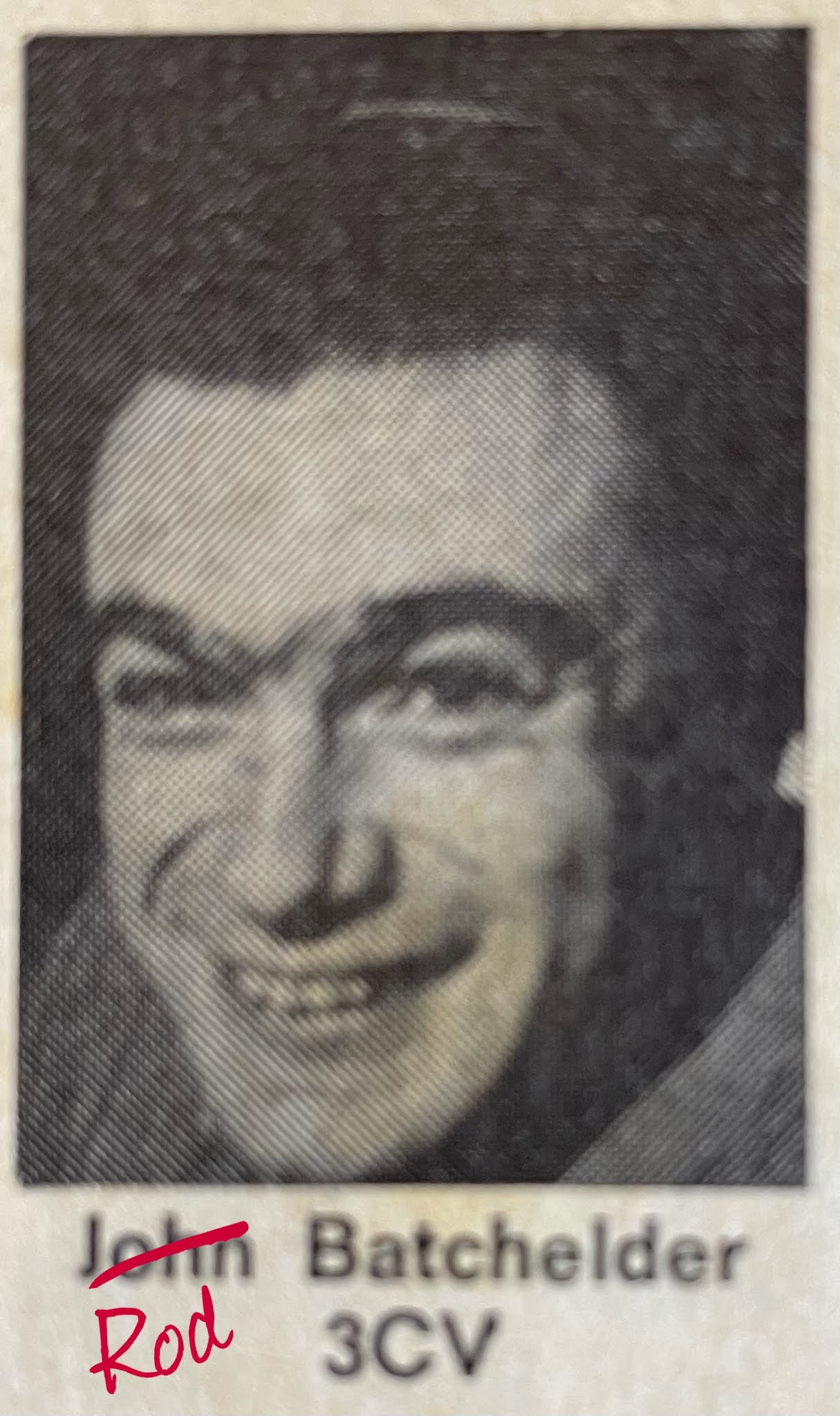
The 1966 ad for 3CV (above) is from the teenage pop magazine Go-Set, showcasing 3CV disc jockeys Rod Batchelder, John McPhee and Graham Lever. It reflects how I remember some country radio from the late 1960s. The graphics are groovy, and the music format is Top 40. 

Like some other commercial country stations in the late 1960s, 3CV was following the big city trend of programming Top 40 music hosted by disc jockeys. I was a teenager who was picky about both music and radio, but I never hesitated to listen to 3CV Maryborough or 3SH Swan Hill as alternatives to the capital city Top 40 stations. (One or the other was always nearby, depending on whether I was away at school or back home at my parents' place.) A bonus was that you could hear some great songs that weren't being played on the big city stations.

My memory of a golden era of country pop radio might be a little selective, though, as I saw when I looked up some of the Country Radio guides in Melbourne's Age newspaper. 

At that time, in 1966, traditional content still dominated across the 13 commercial stations* in regional Victoria. Listings like these hardly suggest wall-to-wall Top 40: 11:40am Friendship Club (3SR), 10:15am Singalong (3SR), 3:15pm Variety Fair (3BO), and 8:30pm Bible Speaks To You (3HA).

Several serials were still on air across the state, including Dr Paul (3BO, 3CV, 3HA, 3NE, 3SH, 3TR). The serials were disappearing from Australian radio, and in the capital city Melbourne by this time only 3DB was still airing them. The networked radio quiz shows - Quiz Kids, Winner Take All, Pick-a-Box  and all - had already folded or migrated to TV which came to Australia in 1956.

When I looked at 3CV's schedule in the Country Radio guide around the time of the  Go-Set ad, I was surprised to see that it doesn't mention deejays Batchelder, McPhee and Lever, nor does it name the programs from the ad. 

Batchelder's Big Breakfast Show is easy to spot - 6am Breakfast Show - and you can guess that McPhee's Big 100, or Lever's Go Go Show fitted in somewhere to 2pm Hits, 4pm Teen Beat, and 7pm Music. Not as exciting as the THE GREATEST SHOW IN VICTORIA the Go Go Show, though. (3CV's DJ Show came later.)

In the capital city radio guide in the same paper, top-rating Top 40 station 3UZ had for some time listed most of its programs as deejay shows - DON LUNN - Breakfast session, STAN ROFE SHOW, KEN SPARKES SHOW -  so I had expected something similar.
 
In fact the only on-air name to appear in the 3CV schedule is 11:30am Binnie Lum, the notable women's broadcaster who had been dropped by Melbourne station 3XY in 1964 but survived on the regional Victorian Broadcasting Network (VBN).

Certainly, there's nothing much in the Guide to suggest that 3CV was THE STATION THAT'S GETTING THE COUNTRY GO-GOING From Victoria's Swingin' Centre. Perhaps it was a lack of space, or perhaps the writer of the Go-Set ad didn't coordinate with whoever typed up the schedule for The Age. Even so, I do remember listening to deejay shows on 3CV, but I suppose I would have twiddled the dial when anything else came on.

[CLICK ON IMAGE FOR LARGER VIEW]

Up on the Murray River at 3SH Swan Hill in 1966, some of the station's on-air personalities were starting to appear in the printed schedule. The ubiquitous 10am Dr Paul serial is still there, and so is 11:30am Binnie Lum (VBN again) along with networked cooking celebrity 11:15am Graham Kerr. But there are also some local names: 9am Alan Kidd Ladies' Show, 12pm Mal Sutton and 4pm Bob Taylor. Still hanging on were early evening serials 6:45pm Dad and Dave and 7:15pm Three Brothers, and that country radio fixture from the USA, 9:30pm Back to the Bible. 

By 1968, though, it was wall-to-wall disc jockeys at 3SH. (The 3SH ad above is from Go-Set in June 1967). No serials, no specified "ladies" show, and no American evangelism (not in the program guide, anyway); just 5am Denis O'Kane Show, 9am Mal Sutton Show, 12pm Barry Bissell Show, 4pm Bob Taylor, 7 pm John Browne, with news at least hourly. This looks a lot like the DJ oriented schedule of 3UZ. The entry for 3SH in the Australian Radio Almanac (1967) uses the phrase strictly top 40 format.

3SH's Barry Bissell became a legend of Australian radio, best known through his years at FOX-FM in Melbourne and as founding host of the national Take 40 Australia. 

In a 2019 Swan Hill Guardian interview, Barry recalls the change from “very old school” programming to a "hits format" soon after he joined 3SH in 1967 when he was still a teenager. He says, “There was a box of 45s (records) in the studio, and an A, B and C list, but I cheated all the time and played my favourites; which everybody did.” This sort of personal input might help to explain my impression that the records on a country station could depart from what was heard in the big city. 

In 1968, 3TR Sale* was also listing deejays' names as program titles: 5am Laurie Miller, 9:30am Sam Gales, 2:30pm Keith Wells, and 5pm George Danes.  

Other stations list only one or two on-air names, but to be fair there are programs scattered throughout the Country Radio schedules that were probably filled with Top 40 music. Apart from the generic 2pm Music (3NE but common across the board), they include the aforementioned  5pm DJ Show, plus 7 pm Top 40 Hits in DJ Show to Midnight (3CV), 6pm Teentime (3HA), and 5:45pm Latest Hits from the Charts (3UL). There could even be some pop hits behind the neutral 7:30pm Evening Show (3HA), and although 4pm Music for Moderns (3CS) is an ungroovy name, the timeslot is right for an after-school deejay show.

Other examples don't really scream "Top 40": 10:30pm Jazz Club (3YB), 10:40pm Armchair Melodies (3BA), 7:15pm Light and Lovely (3GL), and 8:30pm Serenade (3SR), so the trend wasn't unanimously followed. 

Although I remember the music, country radio was full of other content. Country stations served their local communities in the way that the local newspapers did. As Barry Bissell says, it was "market reports, funeral announcements, dedications to those in hospital". They aired networked content and syndicated shows distributed on discs, but they had a full roster of local announcers from opening to closing.

There were shows for children such as 4:35pm Children (3NE) and (I'm guessing) 4pm Sunshiners' Club (3MA); and women's shows 2pm Women's Corner (3BA), 9am Women's Mag (3GL). In their heyday, some women's shows had active clubs with an off-air presence, as the 3SH Women's Club had with its own club-rooms. A surprising number of religious programs were aired, especially but not necessarily on Sundays: 3:45pm Christian Science (3BO), 5:30pm Religion (3BA), 9pm Salvation Army (3NE).

These days, it's sad to see multiple stations carrying identical lineups from a distant hub, sometimes with only one or two local announcers. Increasingly, this happens in a town where the local paper is struggling or has closed down. On the bright side, many country towns now have a thriving community radio station, including 99.1 SmartFM in Swan Hill and Goldfields FM in Maryborough Vic.

Back in the day, regional commercial radio could even do proper local news coverage. One night in Swan Hill in 1963, when it seemed half the town turned out to see a fire that had broken out in a timber yard, we were joined by 3SH's Ken Guy with a portable recorder, covering the story for the next day's News. 

I shared that with Ken on a Facebook thread not long ago. He said he didn't remember it, but it sounded right. It's good to know that not all my memories of country radio are faulty.

- - -

Those D.J. Shows
Right now, I'm in school
But as soon as the homebell rings
I'm gonna run to my locker
And gather up all my things
Then out the door
Running home I'll go
Faster than a new jet plane
And then turn on my radio
I'm gonna listen to those D.J. shows
I'm gonna be diggin' that rock 'n' roll
If I don't I'll go insane

This was an early Supremes track written and produced by William "Smokey" Robinson. It didn't make their first album Meet The Supremes and remained unreleased until an expanded edition of the album in 2010. [Also on Spotify]

Patrice Holloway also recorded a version, also unreleased until years later. YouTube

- - -

3SH was clearly serious about promoting its on-air personalities, as seen in the Go-Set ad for 3SH (above, in text). Of all the Victorian country stations listed in the 1967 Australian Radio Almanac [view here], it has the biggest entry. Note the phrase strictly top 40 format. 

[CLICK ON IMAGE FOR LARGER VIEW]

- - -

VBN: the Victorian Broadcasting Network, 1965 trade ad.


[CLICK ON IMAGE FOR LARGER VIEW] 

- - -

The Victorian commercial country stations listed in the Country Radio guide in The Age in the 1960s, with their call-signs and frequencies at that time.†

3BA Ballarat 1320 kcs (kHz)
3BO Bendigo 960
3CS Colac 1130
3CV Maryborough 1440
3GL Geelong 1350
3HA Hamilton 1000
3MA Mildura 1470
3NE Wangaratta 1600
3SH Swan Hill 1330
3SR Shepparton 1260
3TR Sale 1240*
3UL Warragul 530
3YB Warrnambool 1210

3LK Lubeck 1090, near Horsham (now 3WM), was mainly a relay station for 3DB Melbourne and wasn't listed in the Country Radio guides.

*3TR: From 1930 it was in Trafalgar but moved to Sale in 1932, then to Traralgon in 1989. Even earlier, in 1929, it was an amateur station 3FB owned by Frank Berkery.

†The frequencies of Australian AM stations were changed in 1978 to space them at 9 kHz intervals instead of the original 10 kHz. For example, 3SH went from 1330 to 1332.

18 July 2021

▶︎ Australian Radio Almanac (c.1967): 1. Victoria


I have a copy of the Australian Radio Almanac that I bought when it was published by The Age and Keith Winslet Publications. Trove estimates 1967, although it could be 1968. It was probably a one-off publication. 

It is a small, slim booklet with a national map of station locations, lists of radio stations, and other features of interest to radio fans. 

The highlight, though, is Voices of Australian Radio, 30 pages of thumbnail photos and brief written notes about Australian announcers on commercial radio and the ABC.

The coverage of stations is uneven. Melbourne's high-rating  3UZ has 0 notes and 3 photos, while 2GB Sydney covers 4 pages, with some quite detailed notes. Even regional station 3SH Swan Hill has 6 notes and 6 photos.

Perhaps it depended on material supplied by the stations and some were more interested than others, or perhaps there was a subscription plan.

Physical copies of the book are held by five Australian libraries: go to Trove and click on Borrow (5).

Here are the pages for Victoria along with the cover.

See also pages for NSW, Queensland, South Australia, Western Australia, Tasmania & NT. 

Click on image for larger view.
For full size on desktop, open image in new tab then click on image.


17 July 2021

▶︎ Australian Radio Almanac: 2. New South Wales

Twelve pages from Voices of Australian Radio in the Australian Radio Almanac, published c.1967.

For more details, see under Victoria.   

See also Queensland, South Australia, Western Australia, Tasmania & NT. 

Click on image for larger view.
For full size on desktop, open image in new tab then click on image.