Music and sidetracks of the 50s, 60s and 70s, more or less related, or not, to my Australian song history site "WHERE DID THEY GET THAT SONG?" at POPARCHIVES.COM.AU
Billboard singles reviews: useful for locating a record in time
1. Why?
Knowing the absolute original version of a song is probably not important to many music fans. Blue Suede Shoes is an Elvis Presley song, and the fact that it was first recorded by Carl Perkins is of limited interest.
Similarly, unless they are pub trivia enthusiasts it is also enough for most listeners to know roughly which year a record was released. Give or take a year or two is probably good enough for historic or nostalgic context. Even, say, late 60s or mid-70s will do.
Some of us, though, cannot rest until we know who first performed or recorded a song. The sport of tracking down original versions often demands more than the year a record came out. We might need the month, or the week, or (surely not!) the day a record was released.
Part of the urge is worthy, to give credit where it's due, credit to the original composers, arrangers and artists. I can't deny there is also the satisfaction of being the smart alec who has knowledge that everyone else has missed.
At the back of the mind, too, is the hope that the undiscovered original version will turn out to be the best, an authentic gem that reveals the raw vision of the creator, unspoilt by the tinkering of the cover versions. That happens, but it often turns out to be the opposite, when the cover version has added something to the original work, even revealed something about it.
As with fanatics of any sport, though, it is hard to explain to an outsider why we are so caught up in it. We keep looking, digging around the archives until we find even a tiny clue. Because the data is limited, though, you might still be left with an approximation or just circumstantial evidence.
- - -
2. When did my canary get circles under his eyes?
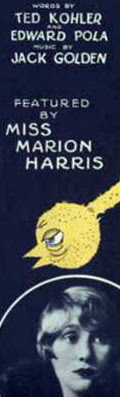
Sheet music (clip)
My Canary Has Circles Under His Eyes became known in Australia through the 1973 version by Captain Matchbox Whoopee Band which charted moderately around the country.
It first appeared in 1931. Most sources will tell you that British bandleader Debroy Somers released the original version, but I believe the British release by American singer Marion Harris has a good claim to being the original.
I can't prove it, and the evidence is limited and partly circumstantial, but the case for Marion Harris is enough to avoid calling either as the original release.
Both records came out in the period April-May 1931, so my aim was to narrow it down:
• In the limited number of British newspaper mentions of the records, only Marion Harris appears in April, and there are no mentions of Debroy Somers until May. (The flaw: I don't have access to the archives of every newspaper in the universe.)
Jack Golden
• Composer Jack Golden had previously been accompanist to Harris, which may explain her early access to the song. It might even have been exclusive to her for a while before any records came out. (The flaw: circumstantial, not proof.)
• Harris appears on the cover of the sheet music. (The flaw: it's common but not necessary that the sheet music carries the song's originator.)
In the meantime, I did find evidence of Marion Harris performing Canary on stage and radio in the US in January 1931. After that there are no other mentions of the song in the news archives until April 1931 when Harris's record is mentioned. For the rest of 1931 the song title often pops up in various contexts. This was enough for me to call Harris as having the Original version: live performance, at least until contradictory evidence comes up.
As I always say about the website, Eventually, someone emails. The page will stand until then. Or until someone comments here, I guess. It does happen.
• Archived books and magazines at Internet Archive. Just search.
• Discographies by e.g Steven C. Barr (The Almost Complete 78 rpm Record Dating Guide), Martin C. Strong(The Essential Rock Discography), or Brian Rust (many, including The complete entertainment discography, from the mid-1890s to 1942).
Sometimes naming a release date is down to speculation, or even an informed hunch. You might have to declare it a draw and let it rest. Disappointing, but we are working with imperfect data.
- - -
Some of this appears in a different form at the About page of my site Where did they get that song? and at my page about My Canary Has Circles Under His Eyes.
"Just Out Of Reach (Of My Two Open Arms)" byThe Stewart Family was the original version of the song. Written by V.F. 'Pappy' Stewart, it was released in 1951 on Bill McCall’s Los Angeles label
Gilt-Edge. The group also had records issued on affiliated label 4 Star.
The Stewart Family was a real family, a country and gospel group led by Virgil F. “Pappy” Stewart (1907-1988), a Blytheville, Arkansas soybean grower and the composer of Just Out Of
Reach, .
The Stewarts
were one of several family musical groups in the area at this time.
They were
part of a thriving country, hillbilly and gospel music
scene nurtured in the 1930s and 40s by local radio stations like KLCN in
Blytheville and KOSE in nearby
Osceola.
In 1970, Blytheville journalist Jim Branum noted
that KLCN has done as much for country artists than any other station its size in the
nation, and acknowledged the prevalence of family groups amongst hillbilly artists.
The Stewart family worked a farm, but they were also
musicians, and they married musicians, and they had neighbours who were
musicians. The names of Stewart family
and friends appear in the line-ups of multiple groups on
local radio, and at local events like the National Cotton Picking
Contest.
Some of these artists cut some
records on minor labels, but Pappy Stewart’s extraordinary success with Just Out Of
Reach, and his connection with the music stars who recorded it, is an outlier in a mainly localised industry.
Pappy, his two daughters, and his sister appeared regularly on KLCN Blytheville from 1934 after they convinced the station to give them a regular 15-minute segment. They toured
extensively around the region until 1953. The band broke up as the daughters began raising families of their own.
The family was billed at local events as Pappy Stewart’s Family or Pappy Stewart And His Famous Family. For a gig in Charleston, Missouri in October 1945 they were advertised as
“Pap Stewart And His Arkansas Cowgirls of Radio Station KLCN, Blytheville“.
In 1951 the line-up was Pappy Stewart
(guitar), his daughters Bethyl (fiddle and
vocals) and Janet (bass violin), his
multi-instrumental sister Baba Howard
(mainly accordion) and Bethyl’s husband Buddy
Brown.
Baba had also been heard on KLCN in Don & Baba Howard & Their Smiling Hillbillies (clearly along similar lines to Don Howard and His Smiling Hillbilly Gang and Donald
Howard and His Smiling Hillbillies, also spotted in the archives).
Also touring with the Stewarts during this period were Wilma Scott and Don Whitney.
Wilma Scott was from Blytheville too, and
had been in the Burdette Girls Quartet with Bethyl, Janet and Baba Stewart in the early 1940s. Don Whitney (1926-1985), from nearby Osceola, also worked
solo, on stage as Arkansas’ Biggest Hillbilly and on several discs on the 4
Star label. He was a disc jockey at KLCN Blythedale and at KOSE Osceola where he
became general
manager.
Apart from Just Out Of Reach, Pappy Stewart was a prolific songwriter who
had a number of
other songs recorded by other artists including Patsy Cline. Many of the songs in the
family’s repertoire were written by Pappy or his sister Baba.
When interviewed in 1976 for a profile in Blytheville’s Courier-News, Pappy Stewart
was 68 years old and had been married to Gladys for 50 years. He was long retired from
professional music and happily living and working on his farm. His sister Baba, who was much
younger than Pappy, died in Blythedale in 2013, aged 87.
I’m just a country boy. I’d rather farm as do anything. I’m doing what I want to do.
That joyous early Supremes song Those D.J. Shows strikes a chord with me. It's about getting out of school and racing home to listen to a Top 40 record show. YouTubeSpotify
Even in country Victoria,
where I grew up, it wasn't unusual to find a late
afternoon radio show aimed at teenage pop fans. Maryborough station 3CV even had one called DJ Show.
Further north, in Swan Hill, it was the 1330 Show on 3SH (1330 kHz) which held phone-in polls that seem quaint from this distance: Are you a rocker or a jazzer? or Mods versus surfies! Remarkable, considering that this was around late 1963, when the afternoon and evening highlights on 3SH included 4pm Back to the Bible, 6:45 Dad and Dave, and 8:30pm Old-time Dance.
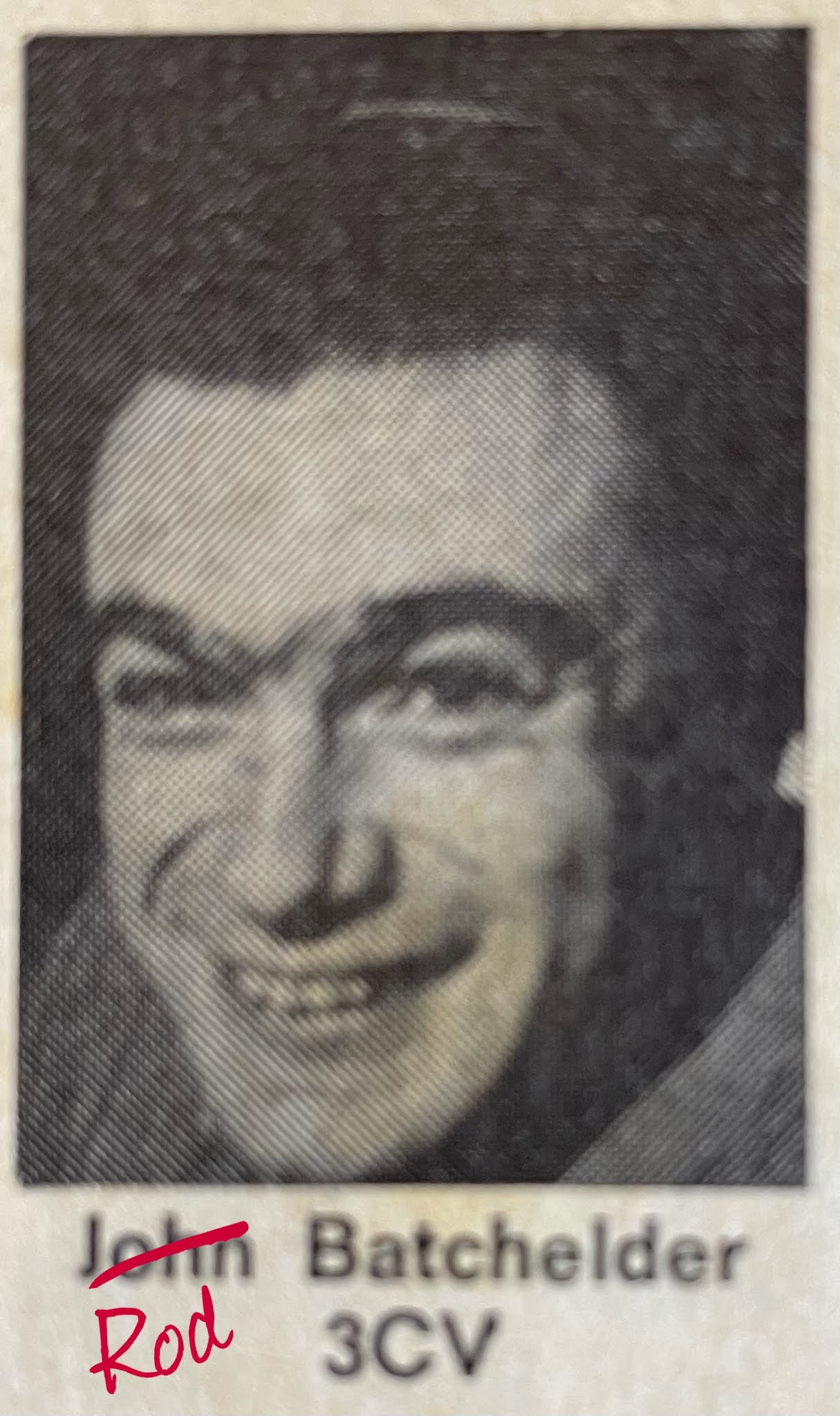
The 1966 ad for 3CV (above) is from the teenage pop magazine Go-Set, showcasing 3CV disc jockeys Rod Batchelder, John McPhee and Graham Lever. It reflects how I remember some country radio from the late 1960s. The graphics are groovy, and the music format is Top 40.
Like some other commercial country stations in the late 1960s, 3CV
was following the big city trend of programming Top 40 music hosted by
disc jockeys. I was a teenager who was picky about both music and radio,
but I never hesitated to listen to 3CVMaryborough or 3SH Swan Hill
as alternatives to the capital city Top 40 stations. (One or the other
was always nearby, depending on whether I was away at school or back
home at my parents' place.) A bonus was that you could hear some great
songs that weren't being played on the big city stations.
My memory of a golden era of country pop radio might be a little selective, though, as I saw when I looked up some of the Country Radio guidesin Melbourne's Age newspaper.
At that time, in 1966, traditional content still dominated across the 13 commercial stations* in regional Victoria. Listings like these hardly suggest wall-to-wall Top 40: 11:40am Friendship Club (3SR), 10:15amSingalong (3SR), 3:15pmVariety Fair (3BO), and 8:30pm Bible Speaks To You(3HA).
Several serials were still on air across the state, including Dr Paul (3BO, 3CV, 3HA, 3NE, 3SH, 3TR). The serials were disappearing from Australian radio, and in the capital city Melbourne by this time only 3DB was still airing them. The networked radio quiz shows - Quiz Kids, Winner Take All, Pick-a-Box and all - had already folded or migrated to TV which came to Australia in 1956.
When I looked at 3CV's schedule in the Country Radio guidearound the time of the Go-Set ad, I was surprised to see that it doesn't mention deejays Batchelder, McPhee and Lever, nor does it name the programs from the ad.
Batchelder'sBig Breakfast Show is easy to spot - 6am Breakfast Show - and you can guess that McPhee'sBig 100, or Lever'sGo Go Show fitted in somewhere to 2pm Hits, 4pm Teen Beat, and 7pm Music. Not as exciting as the THE GREATEST SHOW IN VICTORIA the Go Go Show, though. (3CV'sDJ Show came later.)
In the capital city radio guide in the same paper, top-rating Top 40 station 3UZ had for some time listed most of its programs as deejay shows - DON LUNN - Breakfast session, STAN ROFE SHOW, KEN SPARKES SHOW - so I had expected something similar.
In fact the only on-air name to appear in the 3CV schedule is 11:30am Binnie Lum,the notable women's broadcaster who had been dropped by Melbourne station 3XY in 1964 but survived on the regional Victorian Broadcasting Network (VBN).
Certainly, there's nothing much in the Guide to suggest that 3CV was THE STATION THAT'S GETTING THE COUNTRY GO-GOING From Victoria's Swingin' Centre. Perhaps it was a lack of space, or perhaps the writer of the Go-Set ad didn't coordinate with whoever typed up the schedule for The Age. Even so, I do remember listening to deejay shows on 3CV, but I suppose I would have twiddled the dial when anything else came on.
[CLICK ON IMAGE FOR LARGER VIEW]
Up on the Murray River at 3SH Swan Hill in 1966, some of the station's on-air personalities were starting to appear in the printed schedule. The ubiquitous 10am Dr Paul serial is still there, and so is 11:30am Binnie Lum (VBN again) along with networked cooking celebrity 11:15am Graham Kerr. But there are also some local names: 9am Alan Kidd Ladies' Show,12pm Mal Sutton and 4pm Bob Taylor. Still hanging on were early evening serials 6:45pm Dad and Dave and 7:15pm Three Brothers, and that country radio fixture from the USA, 9:30pm Back to the Bible.
By 1968, though, it was wall-to-wall disc jockeys at 3SH. (The 3SH ad above is from Go-Set in June 1967). No serials, no specified "ladies" show, and no American evangelism (not in the program guide, anyway); just 5am Denis O'Kane Show, 9am Mal Sutton Show, 12pm Barry Bissell Show, 4pm Bob Taylor, 7 pm John Browne, with news at least hourly. This looks a lot like the DJ oriented schedule of 3UZ. The entry for 3SH inthe Australian Radio Almanac (1967) uses the phrase strictly top 40 format.
3SH's Barry Bissell became a legend of Australian radio, best known through his years at FOX-FM in Melbourne and as founding host of the national Take 40 Australia.
In a 2019 Swan Hill Guardianinterview, Barry recalls the change from “very old school” programming to a "hits format" soon after he joined 3SH in 1967 when he was still a teenager. He says, “There was a box of 45s (records) in the studio, and an A, B and C list, but I cheated all the time and played my favourites; which everybody did.” This sort of personal input might help to explain my impression that the records on a country station could depart from what was heard in the big city.
In 1968, 3TR Sale* was also listing deejays' names as program titles: 5am Laurie Miller, 9:30am Sam Gales, 2:30pm Keith Wells, and 5pm George Danes.
Other stations list only one or two on-air names, but to be fair there are programs scattered throughout the Country Radio schedules that were probably filled with Top 40 music. Apart from the generic 2pm Music (3NE but common across the board), they include the aforementioned 5pm DJ Show, plus 7 pm Top 40 Hits in DJ Show to Midnight (3CV), 6pm Teentime(3HA), and 5:45pm Latest Hits from the Charts (3UL). There could even be some pop hits behind the neutral 7:30pm Evening Show (3HA), and although 4pm Music for Moderns (3CS) is an ungroovy name, the timeslot is right for an after-school deejay show.
Other examples don't really scream "Top 40": 10:30pm Jazz Club(3YB), 10:40pm Armchair Melodies (3BA), 7:15pm Light and Lovely (3GL), and 8:30pm Serenade (3SR), so the trend wasn't unanimously followed.
Although I remember the music, country radio was full of other content. Country stations served their local communities in the way that the local newspapers did. As Barry Bissell says, it was "market reports, funeral announcements, dedications to those in hospital". They aired networked content and syndicated shows distributed on discs, but they had a full roster of local announcers from opening to closing.
There were shows for children such as 4:35pm Children (3NE) and (I'm guessing) 4pm Sunshiners' Club (3MA); and women's shows 2pm Women's Corner (3BA), 9am Women's Mag (3GL). In their heyday, some women's shows had active clubs with an off-air presence, as the 3SH Women's Club had with its own club-rooms. A surprising number of religious programs were aired, especially but not necessarily on Sundays: 3:45pm Christian Science (3BO),5:30pm Religion(3BA), 9pm Salvation Army (3NE).
These days, it's sad to see multiple stations carrying identical lineups
from a distant hub, sometimes with only one or two local announcers.
Increasingly, this happens in a town where the local paper is struggling
or has closed down. On the bright side, many country towns now have a thriving community radio station, including 99.1 SmartFM in Swan Hill and Goldfields FM in Maryborough Vic.
Back in the day, regional commercial radio could even do proper local news coverage. One night in Swan Hill in 1963, when it seemed half the town turned out to see a fire that had broken out in a timber yard, we were joined by 3SH'sKen Guy with a portable recorder, covering the story for the next day's News.
I shared that with Ken on a Facebook thread not long ago. He said he didn't remember it, but it sounded right. It's good to know that not all my memories of country radio are faulty.
- - -
Those D.J. Shows Right now, I'm in school But as soon as the homebell rings I'm gonna run to my locker And gather up all my things Then out the door Running home I'll go Faster than a new jet plane And then turn on my radio I'm gonna listen to those D.J. shows I'm gonna be diggin' that rock 'n' roll If I don't I'll go insane
This was an early Supremes trackwritten and produced by William "Smokey" Robinson. It didn't make their first album MeetThe Supremes and remained unreleased until an expanded edition of the album in 2010. [Also on Spotify]
Patrice Holloway also recorded a version, also unreleased until years later. YouTube
- - -
3SH was clearly serious about promoting its on-air personalities, as seen in the Go-Set ad for 3SH (above, in text). Of all the Victorian country stations listed in the 1967Australian Radio Almanac [view here], it has the biggest entry. Note the phrase strictly top 40 format.
[CLICK ON IMAGE FOR LARGER VIEW]
- - -
VBN: the Victorian Broadcasting Network, 1965 trade ad.
[CLICK ON IMAGE FOR LARGER VIEW]
- - -
The Victorian commercial country stations listed in the Country Radio guide in The Age in the 1960s, with their call-signs and frequencies at that time.†
3LK Lubeck 1090, near Horsham (now 3WM), was mainly a relay station for 3DB Melbourne and wasn't listed in the Country Radio guides.
*3TR: From 1930 it was in Trafalgar but moved to Sale in 1932, then to Traralgon in 1989. Even earlier, in 1929, it was an amateur station 3FB owned by Frank Berkery.
†The frequencies of Australian AM stations were changed in 1978 to space them at 9 kHz intervals instead of the original 10 kHz. For example, 3SH went from 1330 to 1332.
I have a copy of the Australian Radio Almanac that I bought when it was published by The Age and Keith Winslet Publications. Trove estimates1967, although it could be 1968. It was probably a one-off publication.
It
is a small, slim booklet with a national map of station
locations, lists of radio stations, and other features of interest to
radio fans.
The highlight, though, is Voices of Australian Radio, 30 pages of thumbnail photos and brief written notes about Australian announcers on commercial radio and the ABC.
The coverage of stations is uneven. Melbourne's high-rating 3UZ has 0 notes and 3 photos, while 2GB Sydney covers 4 pages, with some quite detailed notes. Even regional station 3SH Swan Hill has 6 notes and 6 photos.
Perhaps
it depended on material supplied by the stations and some were more
interested than others, or perhaps there was a subscription plan.
Physical
copies of the book are held by five Australian libraries: go to Trove and click on Borrow (5).
Here are the pages for Victoria along with the cover.